TL;DR
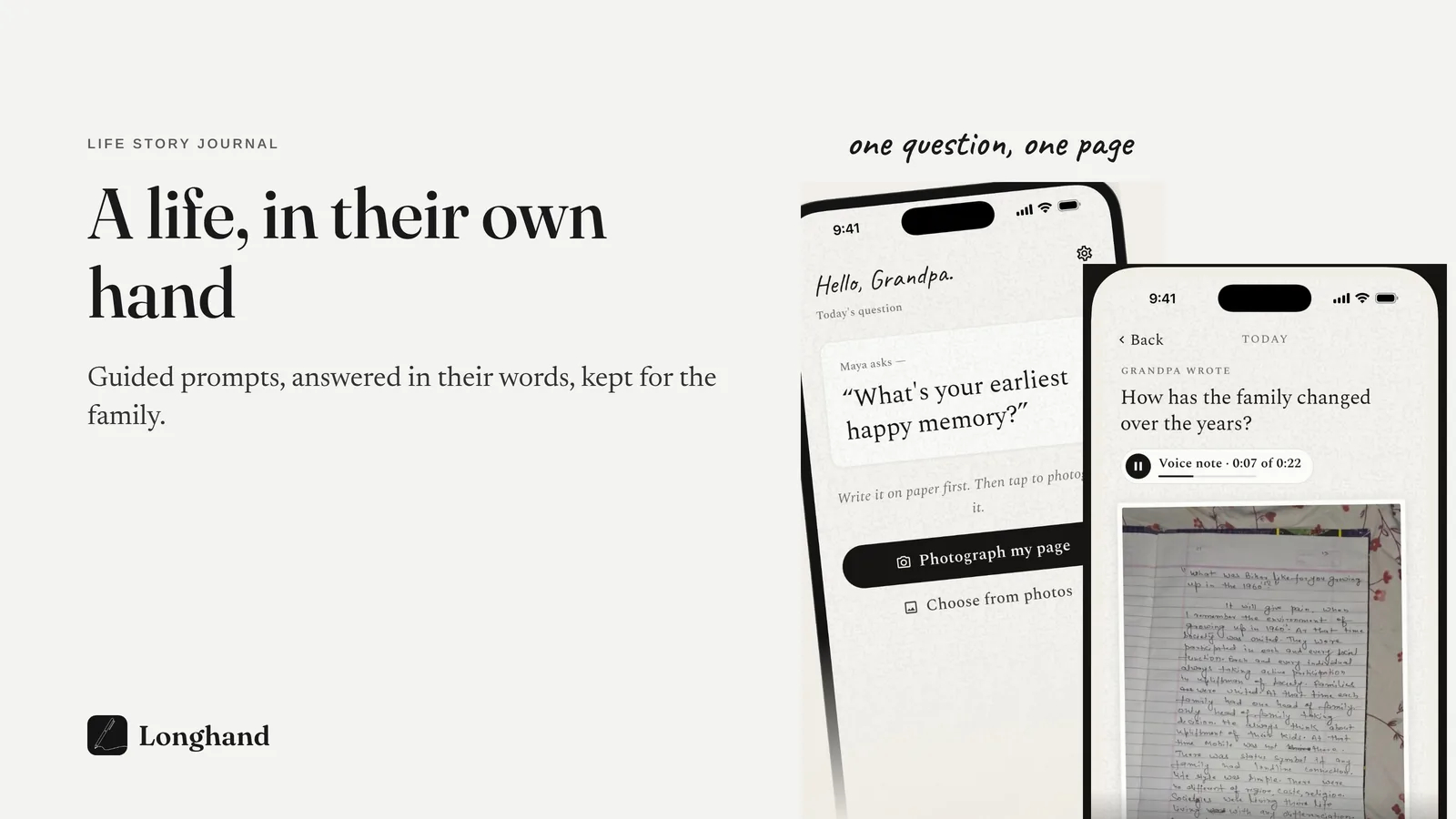
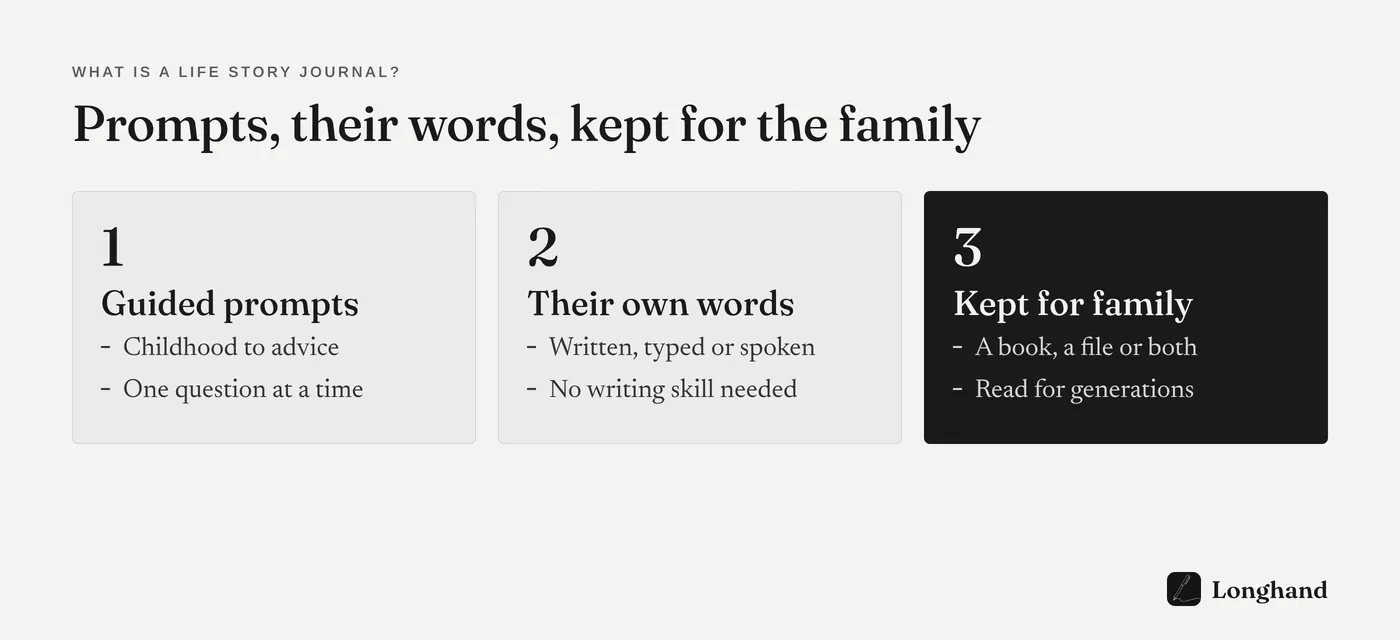
A life story journal is a guided book or app with prompts that help someone record their life in their own words, from childhood to the advice they'd pass on. It can be a printed journal filled in by hand, an app where answers are typed or recorded, or a mix: handwritten pages that are photographed and kept digitally.
I'm Sanket, and I make Longhand: Life Story Journal, so I've spent a lot of time with this question. The honest answer is that the best format depends on the person writing it. Here's how the options compare, and how to actually finish one.
What is a life story journal?
It's a structured way to tell your life story. Instead of a blank notebook, you get prompts (questions such as "What was your first job?" or "What did your mother always say?"), usually grouped by stage of life. You answer them one at a time, in your own words, and the finished journal becomes something your family can keep.
People also call them guided life story journals, memoir journals or grandparent journals. They're often given as gifts to a parent or grandparent, and a printed one works just as well for yourself. If you're looking for questions to start with, see our life story interview questions and questions to ask your grandparents.
Is a paper guided journal or an app better?
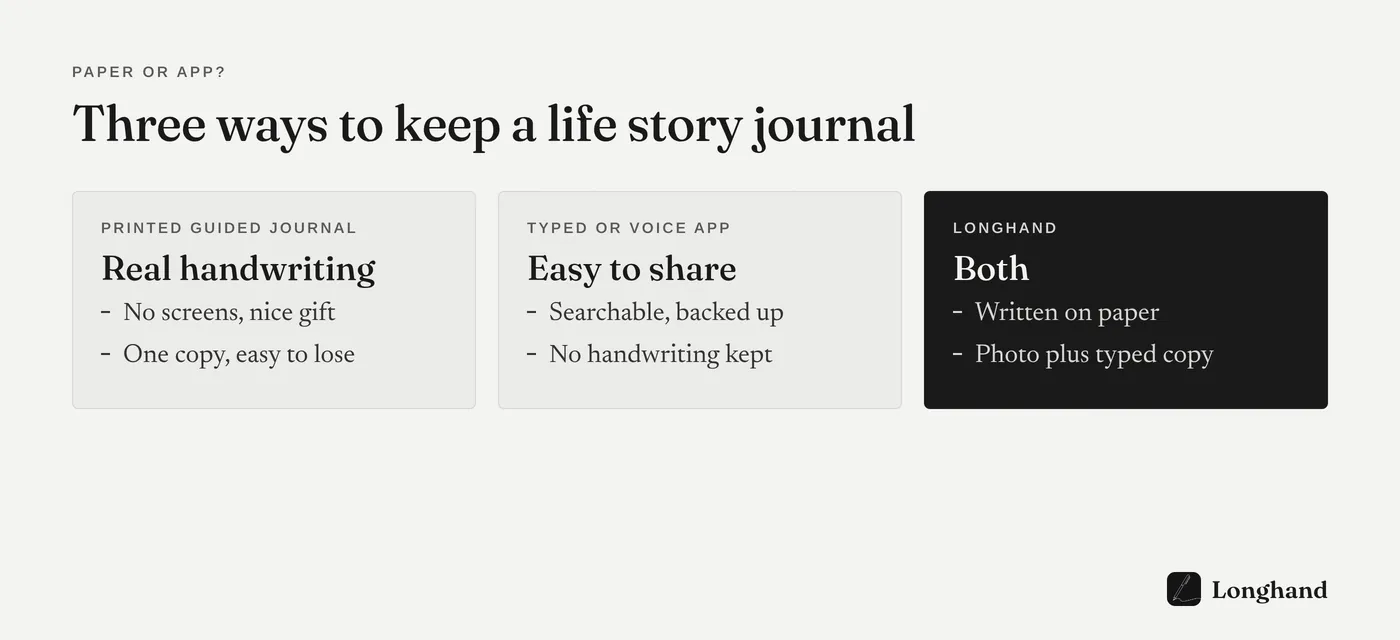
Neither is better for everyone. A printed guided journal keeps real handwriting and needs no screens, but there's one copy and it can sit half-finished in a drawer. An app is easy to share and back up, but most keep typed text or voice only, so the handwriting is lost.
| Printed guided journal | Typed or voice app | Longhand | |
|---|---|---|---|
| How they answer | Write in the book | Type or record on a phone | Write on any paper, take a photo |
| Keeps handwriting | Yes, the original | Usually no | Yes, as a photo, plus a typed copy |
| Copies | One physical copy | Digital, shareable | Digital, shareable, PDF export |
| Prompts | Fixed, printed | Set by the app or family | Chosen by the family, one a day |
| Best for | Someone who loves paper and won't use a phone | Someone happy to type or talk | Someone who'd rather write, with family far away |
| Not ideal for | Families who want to read along as it's written | Keeping the person's handwriting | Someone who won't use a phone camera at all |
General comparison of formats as of November 2026, not of specific products. Features vary by journal and app; check the one you're considering. For guided services that print a book, see our Storyworth alternatives guide.
Not sure which suits the person you have in mind? Try this quick chooser.
How does Longhand do it?
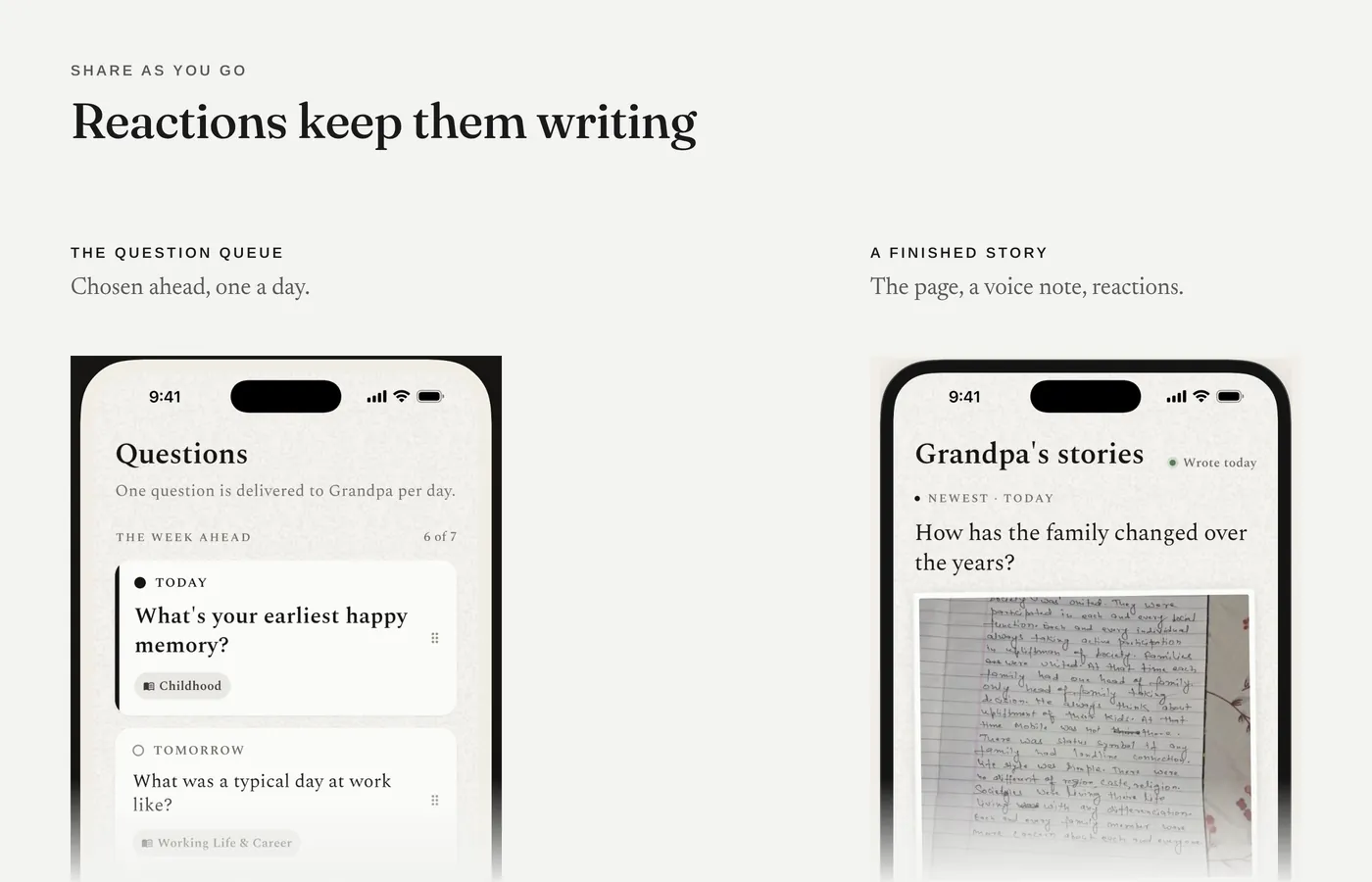
Longhand: Life Story Journal is handwriting-first. You choose questions for a parent or grandparent. They get one question a day, write the answer on any paper and photograph the page. That's all they have to do on the phone.
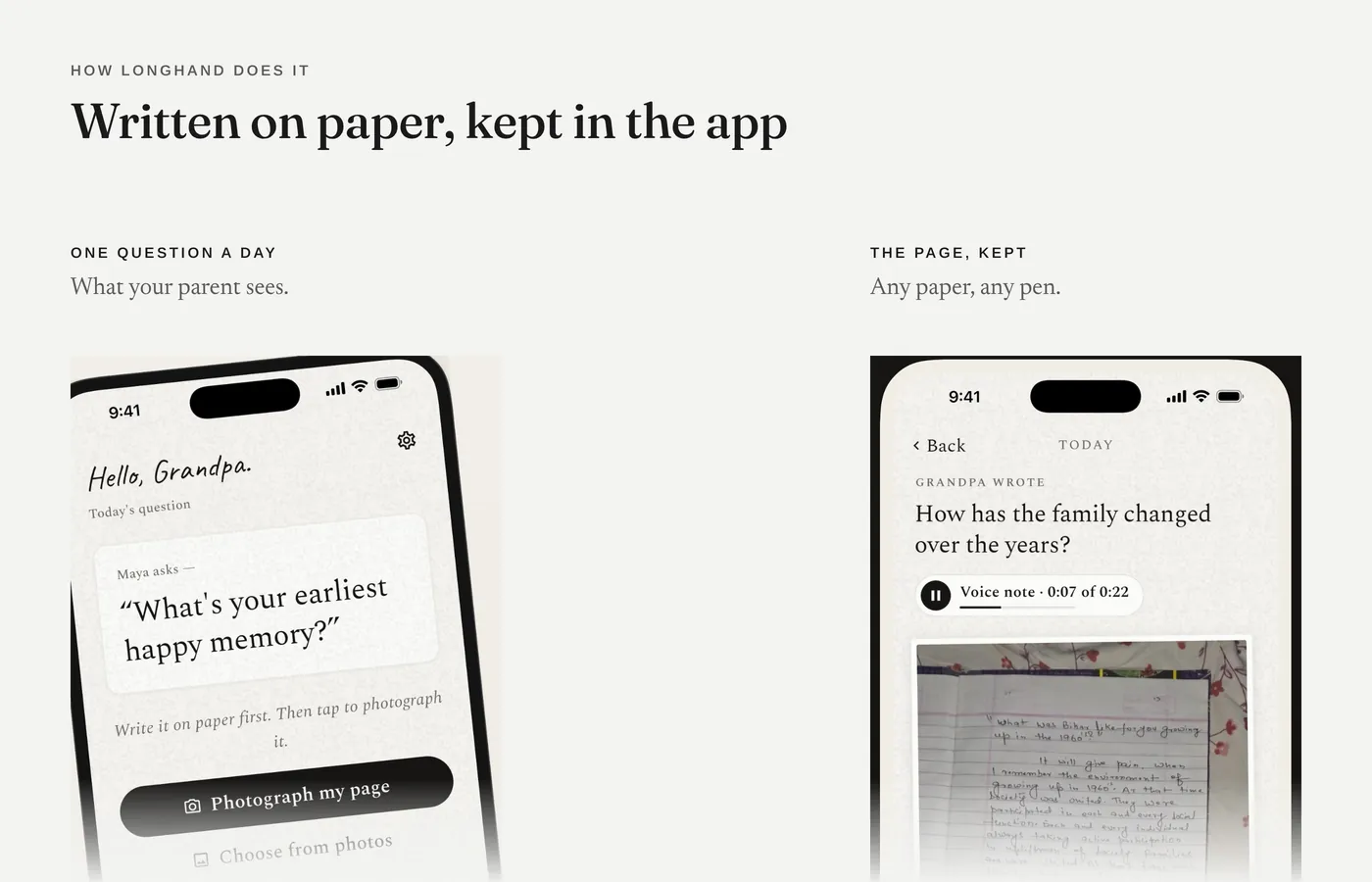
You get the photographed page, a typed copy made from the handwriting, and an optional voice note. It works in 16 languages and reads handwriting in all 16, so they can write in the language they think in. Stories are grouped into chapters as they come in, and you can export a PDF.
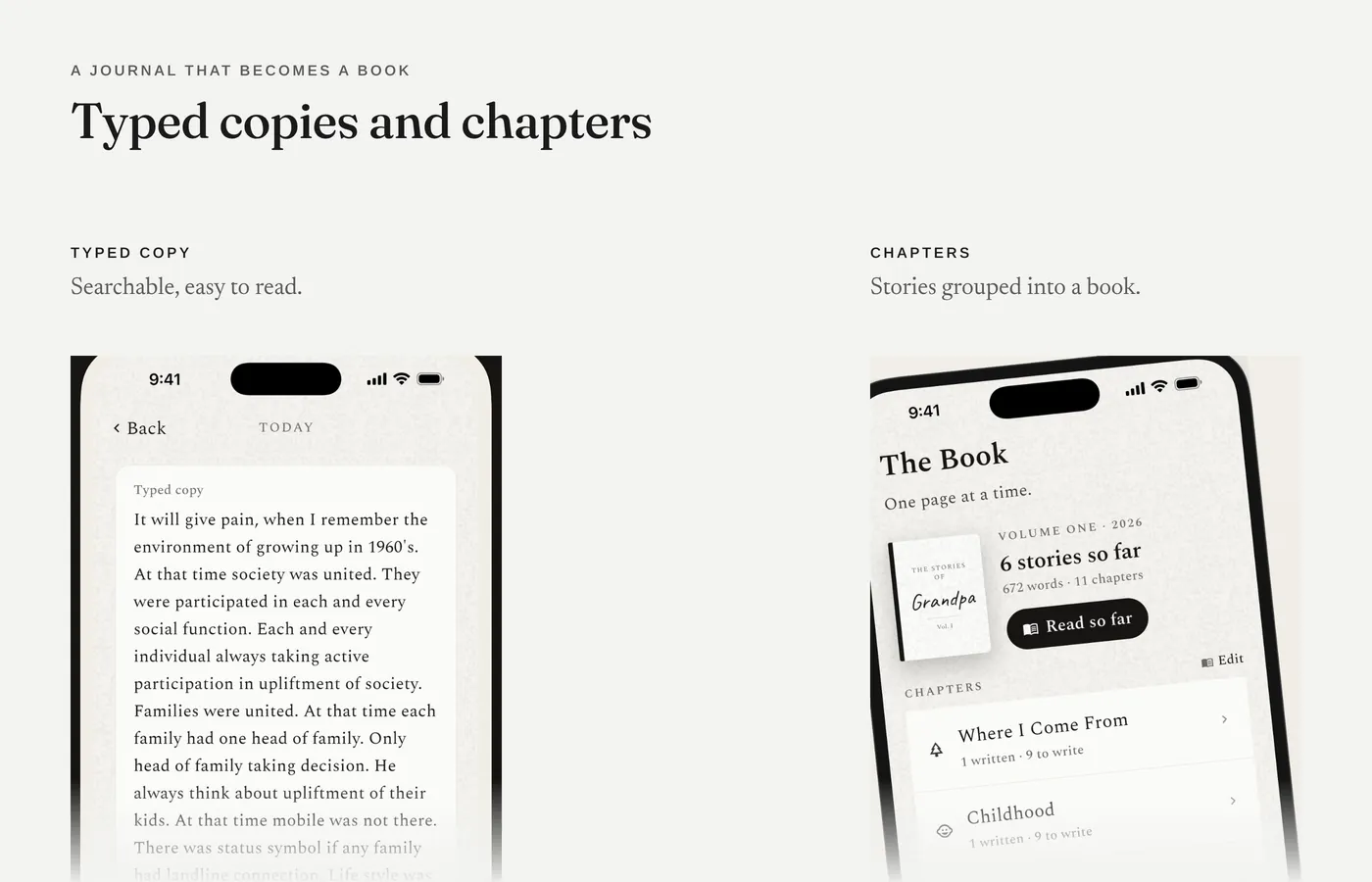
It's on iPhone, iPad and Android, and it's free during early access (it'll become a paid subscription later). What it isn't: a printed journal. If the person you're giving it to won't use a phone at all, a paper guided journal is the better gift, and you can photograph the pages later to keep a copy.
How do you actually finish a life story journal?
Most journals stall in the first month, usually because the prompts feel too big or nobody's reading along. Four habits help:
- One prompt at a time. A single memory, not a whole chapter.
- A set day. Same time each week, like Sunday morning tea.
- Skip freely. No prompt is compulsory. Come back to the hard ones later.
- Share as you go. A reply from a grandchild is the best motivation there is.
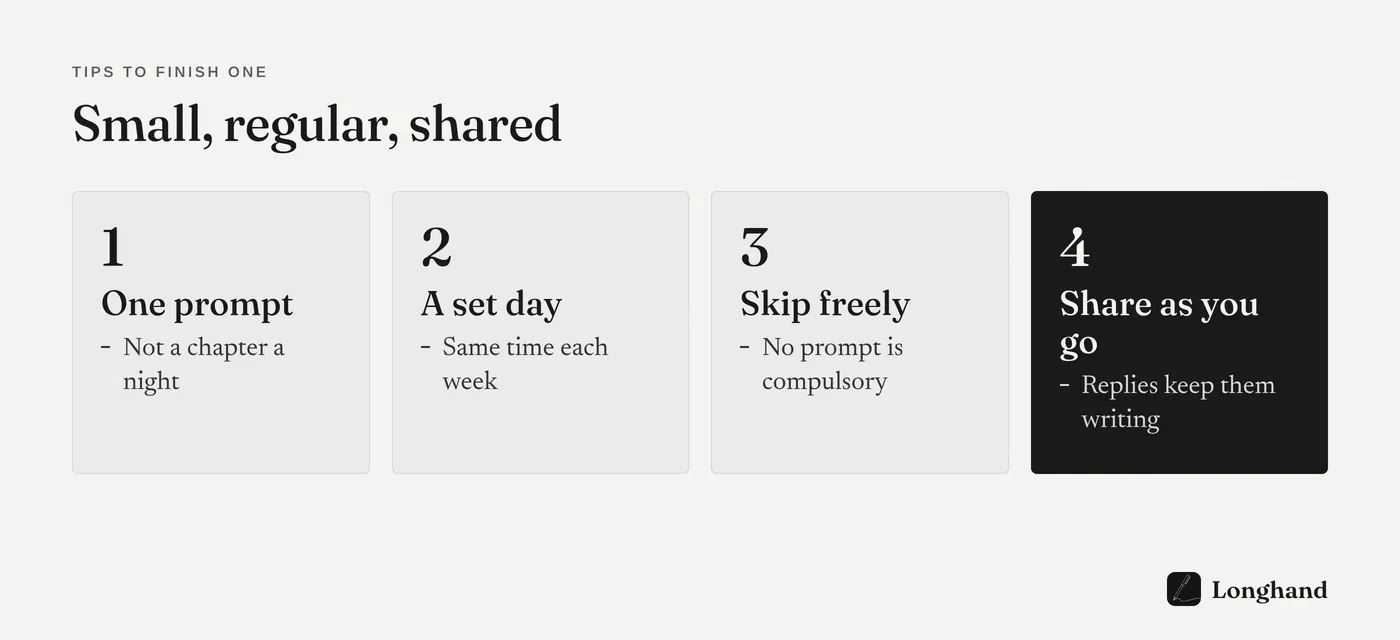
The last one is why I built reactions into Longhand: when the family reacts to a story, the writer knows someone's reading. With a paper journal, you can get the same effect by photographing a page now and then and sending it to the family chat.
When it's done, you can turn it into a printed book. Our guide on how to preserve family history covers keeping it safe, and how to record your parents' life story covers recording it if writing isn't their thing.
Start a parent's life story journal in Longhand
Free during early access. Choose their first question today; they answer on paper, and you keep the page and a typed copy.


Disclosure: I make Longhand: Life Story Journal. Questions or corrections: development@digitalsauce.io.
What else do people ask?
What should I write in a life story journal?
Write one specific memory per prompt: where you were, who was there and what happened. Cover childhood, family, work, love, hard times and the advice you'd pass on. Small, concrete stories are more interesting to read than summaries.
Is a life story journal a good gift?
Yes, especially for a parent or grandparent who enjoys telling stories. It works best when someone in the family reads along and asks follow-up questions, so the journal doesn't sit unfinished in a drawer.
Paper or app: which lasts longer?
Both can last if you look after them. A paper journal can be lost or damaged and has one copy, while an app can be backed up but depends on the service. Keeping both, such as handwritten pages that are photographed, gives you the original and a copy.
What is the difference between a life story journal and a memoir?
A life story journal is a set of guided prompts answered one at a time. A memoir is a written story about part of a life. Many people use a journal's answers as the raw material for a memoir later.