I live in Australia. My father lives in India — retired, and on his own. I call him every single day, but he was never a big talker, and some evenings we'd both go quiet, having run out of things to say.
The idea arrived at a friend's house. On their shelf was a book of their grandmother's life — her stories in her own words, kept with her photographs. I sat there reading it, and it felt like time travel. I wanted that book for my own family, and I knew exactly who should write it: a man who had never typed a story in his life, but could fill a page by hand without thinking twice.
What worried me most was how little there was to keep his mind active. So I started sending him one small question a day. What was your first day of work like? Who taught you to ride a bicycle? He writes the answer out by hand — thinking, remembering, putting pen to paper — and shares it with me. By the time we talk, I have something real to ask him about, and he has something he's quietly proud to have written.
It changed our calls. That's the whole reason Longhand exists: not to replace the phone call, but to give it something to be about — and to keep a parent's mind, and their stories, close for a little longer.
What it became
I'm an independent developer, and I built Longhand first for the two of us, then for anyone with a parent who is far away, or quiet, or simply worth remembering. The shape of it is exactly the habit my dad and I fell into: the app sends one gentle question a day, the writer answers on real paper in their own hand, photographs the page, and Longhand transcribes it — keeping the handwriting alongside the typed words. Day by day, the answers gather into a book the whole family can read, search, and one day print.
The handwriting matters. It is slower than typing, and that's the point — it asks for memory, focus, and a steady hand, and it leaves behind pages that actually look like the person who wrote them. A story in your father's handwriting is not the same thing as a story in Helvetica.
What I care about
Longhand is private by design: stories, photographs and transcripts are shared only between family members. There are no ads, and the stories are never sold. It's free to start, on iPhone, iPad and Android — because the first question should never have a paywall in front of it.
And it's built to be usable by the people it's really for: it supports VoiceOver, Voice Control, Larger Text, Reduce Motion and Differentiate Without Color, and speaks 16 languages — because most of our parents don't tell their stories in English.
My dad was Longhand's first writer. Every page he shares is a page I nearly didn't have. Not long after Longhand shipped, my daughter was born — and one day, his pages will be hers. That's the other half of why it exists: the book at my friend's house let me time-travel to a life I never saw, and I want her to be able to do the same.
If you have someone far away, or quiet, or simply worth remembering — I built this for you too.
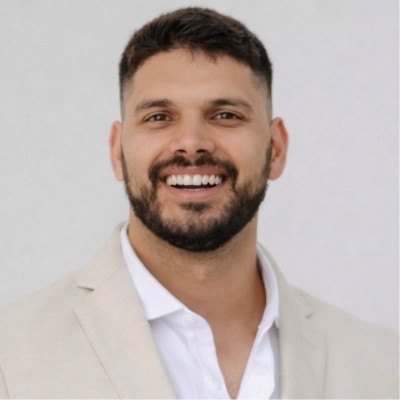
Sanket
Maker of Longhand · built in Australia, for my dad in India
Say hello
If you'd like to reach me — a question, an idea, or just your family's story — I'd love to hear it.
Start with one question.
Longhand is free to download on iPhone, iPad and Android. Ask your first question today — the answers become a book your family keeps.
Get the app