TL;DR
The best handwriting keepsakes turn a few words in a loved one's writing into something you can wear, frame or use: engraved jewellery, a framed letter, a recipe tea towel, or a book of their handwritten stories. Start by scanning the handwriting you already have, then collect more while you can, because most families only find a birthday card or two once they go looking.
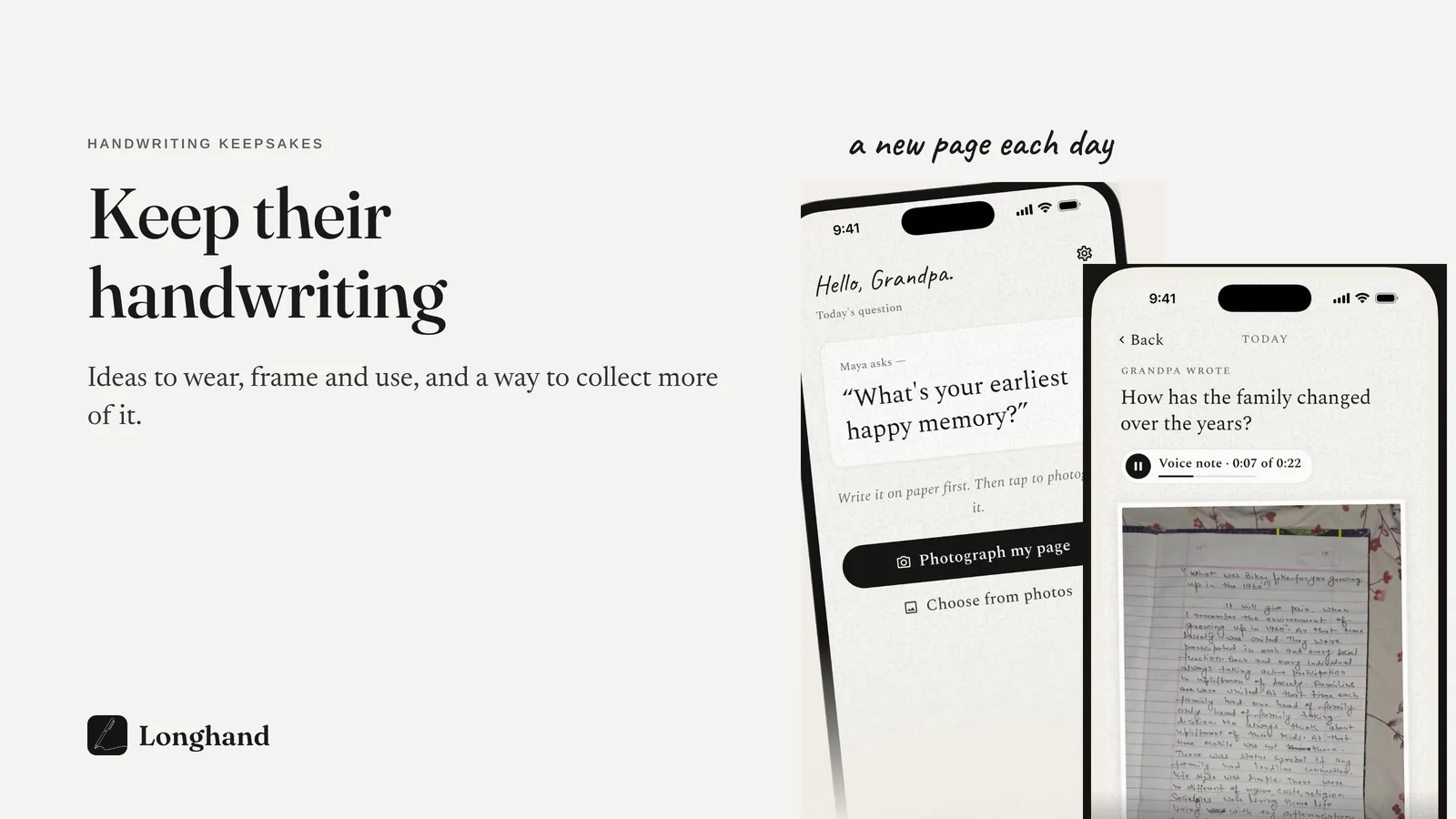
I'm Sanket, and I make Longhand, an app that collects a parent's handwriting one page at a time. I started it because I realised I had almost nothing in my dad's hand. Here are the keepsake ideas I'd recommend, and the free steps that make any of them possible.
What are the best handwriting keepsake ideas?
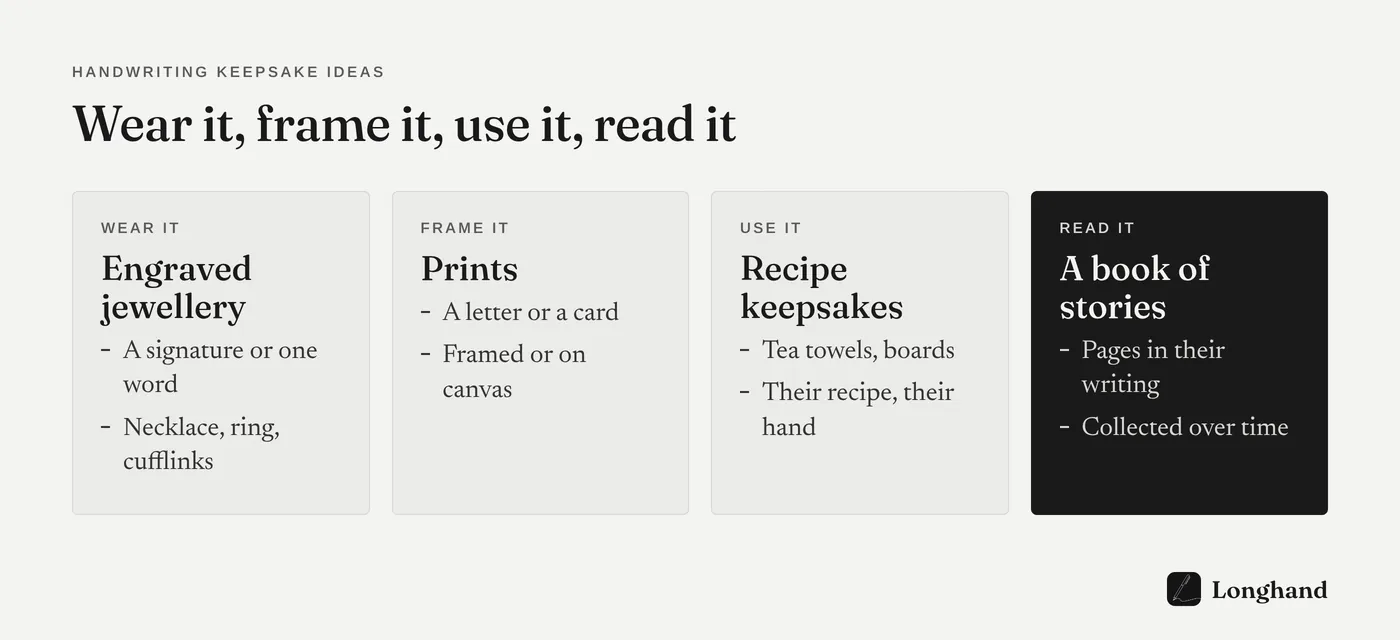
- Engraved jewellery: a signature, "love, Mum" or a single word engraved on a necklace, ring, bracelet or cufflinks.
- A framed letter or card: the whole page, printed at full size or enlarged, next to a photo.
- Recipe keepsakes: a handwritten recipe printed on a tea towel, apron or chopping board.
- Cushions, quilts and mugs: a short note printed on fabric or ceramics.
- A tattoo: a few words in their hand, for the brave.
- A book of their handwriting: pages of their stories, collected over months, which you can print as a book.
How do you turn handwriting into jewellery, prints or tea towels?
You send a maker a clear image, and they trace it. Many independent makers (on Etsy, at local engravers and print shops) offer this, and prices vary a lot by material and size, so compare a few quotes.
What makes the result good is the image you send:
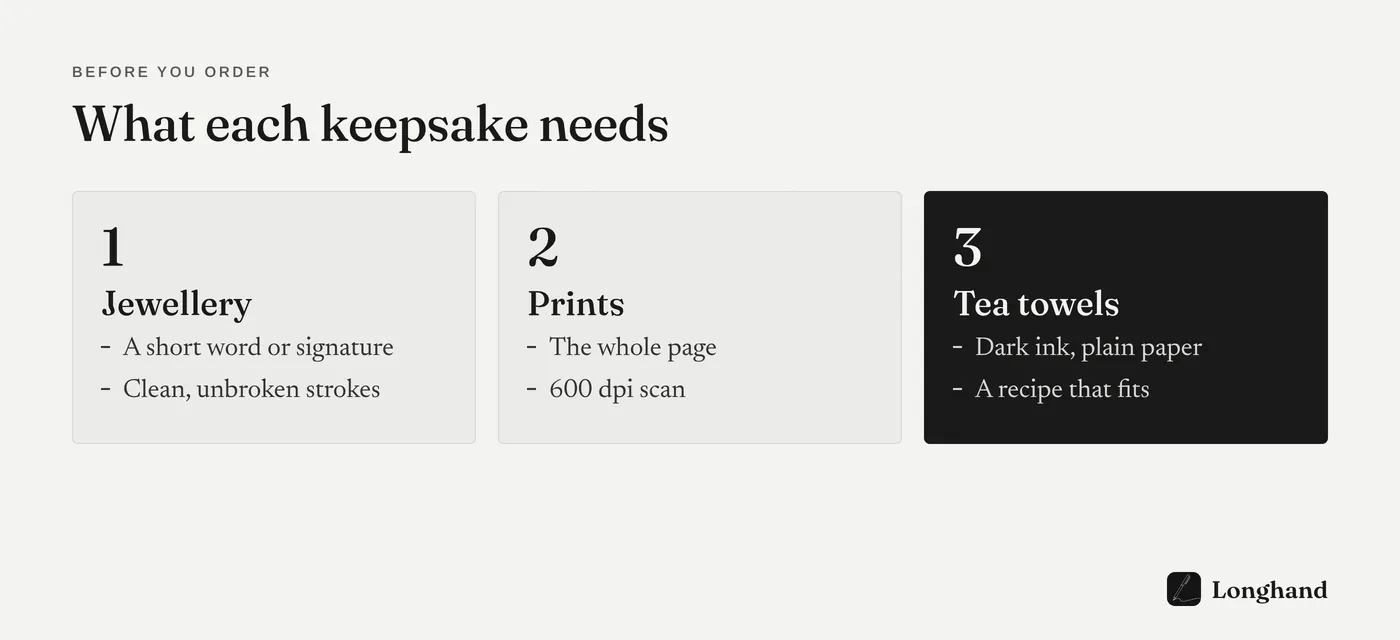
- Jewellery needs a short, clean sample: a signature or one or two words with unbroken strokes. Ask the maker whether they tidy the line or keep it exact. Ordering for Christmas? Check each maker's own cut-off date first, as personalised items take longer.
- Prints need the whole page scanned at high resolution (600 dpi is a safe choice), so it stays sharp when enlarged.
- Tea towels and cushions work best with dark ink on plain paper. A busy background or lined paper makes the trace harder.
How do you collect more of a parent's handwriting?
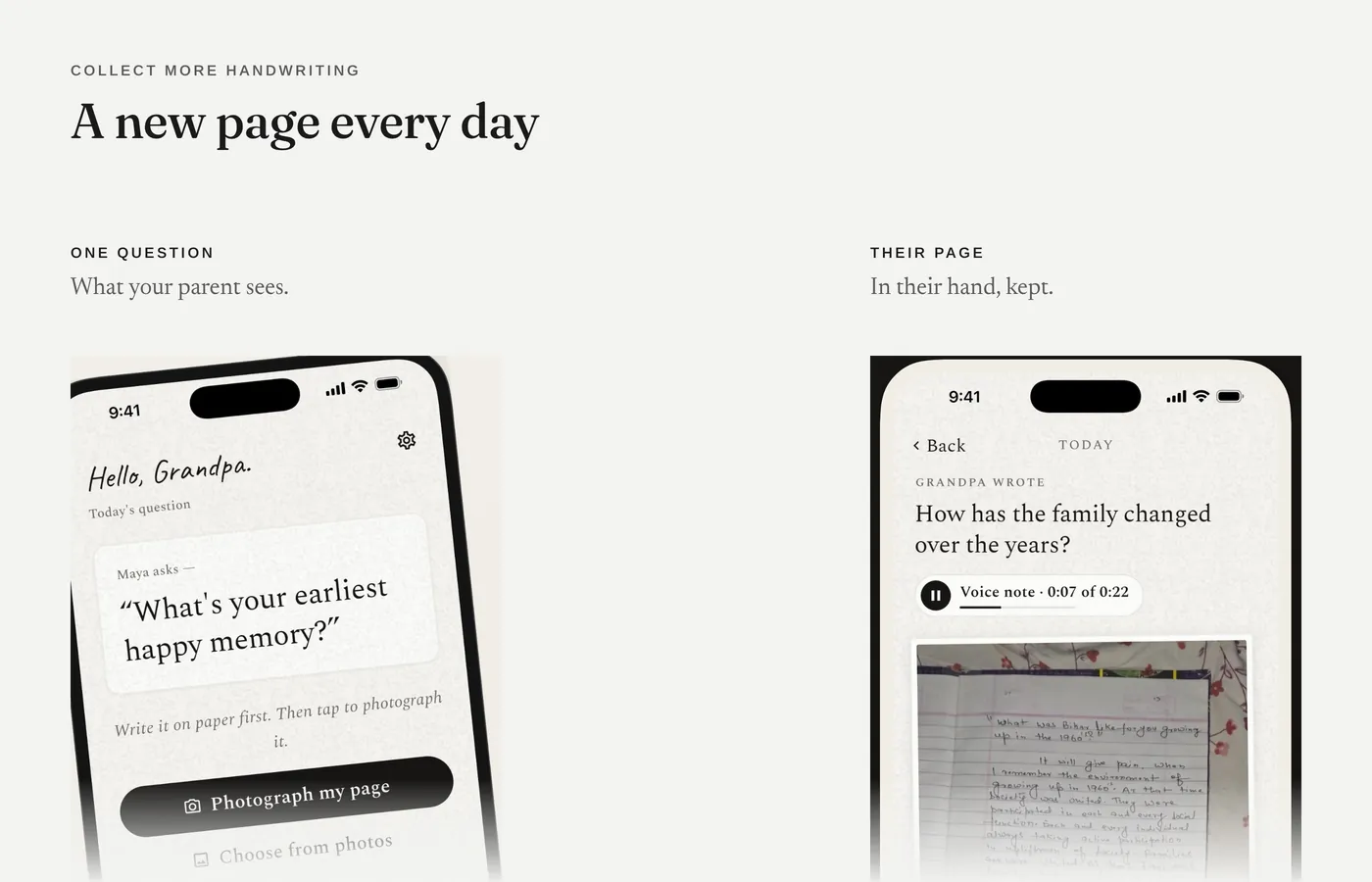
Ask for it. The easiest way I've found is one small question a day: "What was your first job?" "Who taught you to cook?" Your parent writes the answer by hand, and over a few months you have dozens of pages, each with a story in it, not just a signature.
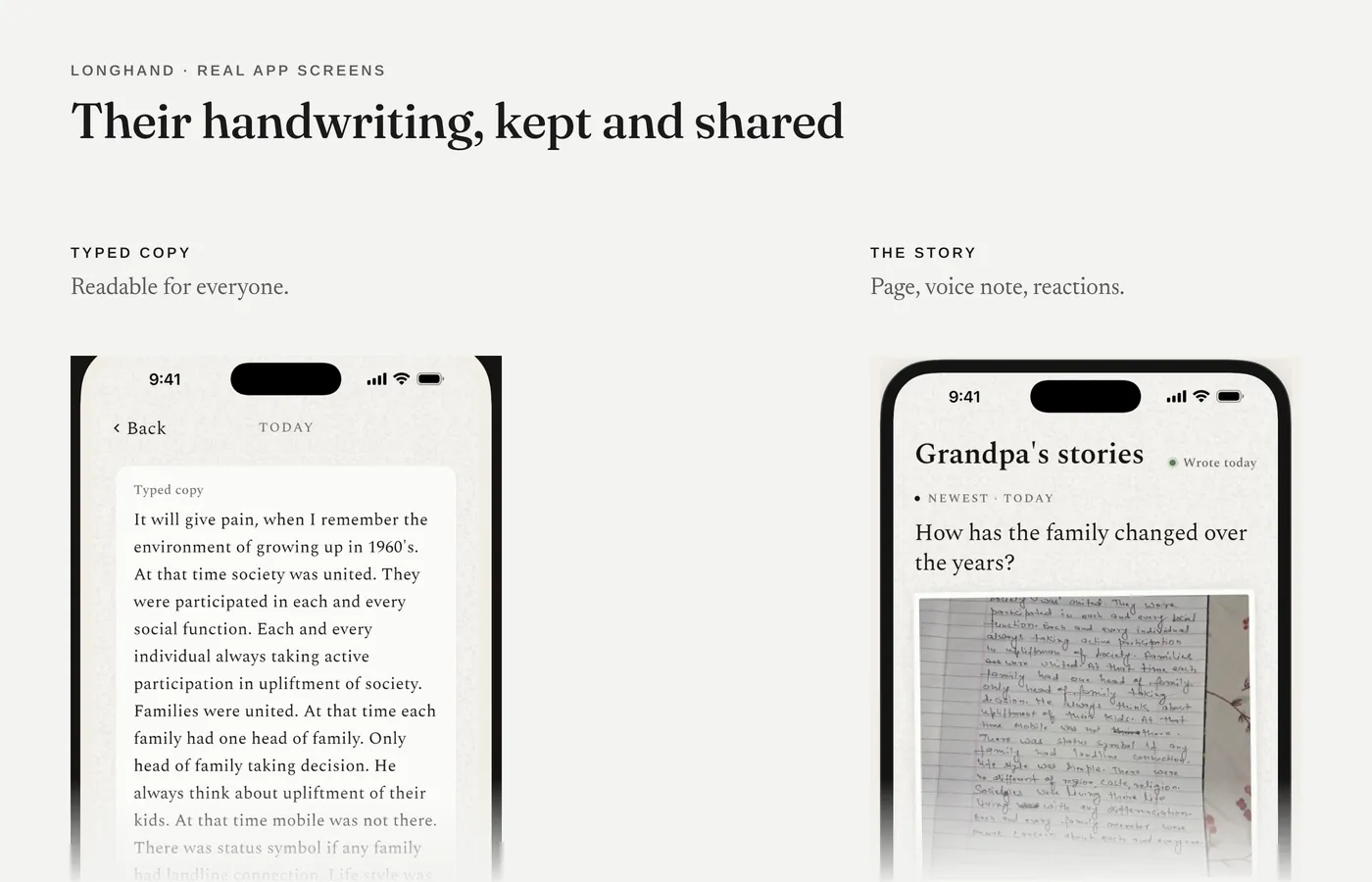
You can do this with a notebook and a list of questions, such as our 100 questions to ask your parents. Or use Longhand: your parent gets one question a day, writes on any paper and photographs the page. You get the page, a typed copy and an optional voice note. It works in 16 languages and reads handwriting in all 16, it's on iPhone, iPad and Android, and it's free during early access.
Those pages become your keepsake material: a phrase for a necklace, a recipe for a tea towel, a letter to frame. And together they make a book.
How do you scan handwriting so it lasts?
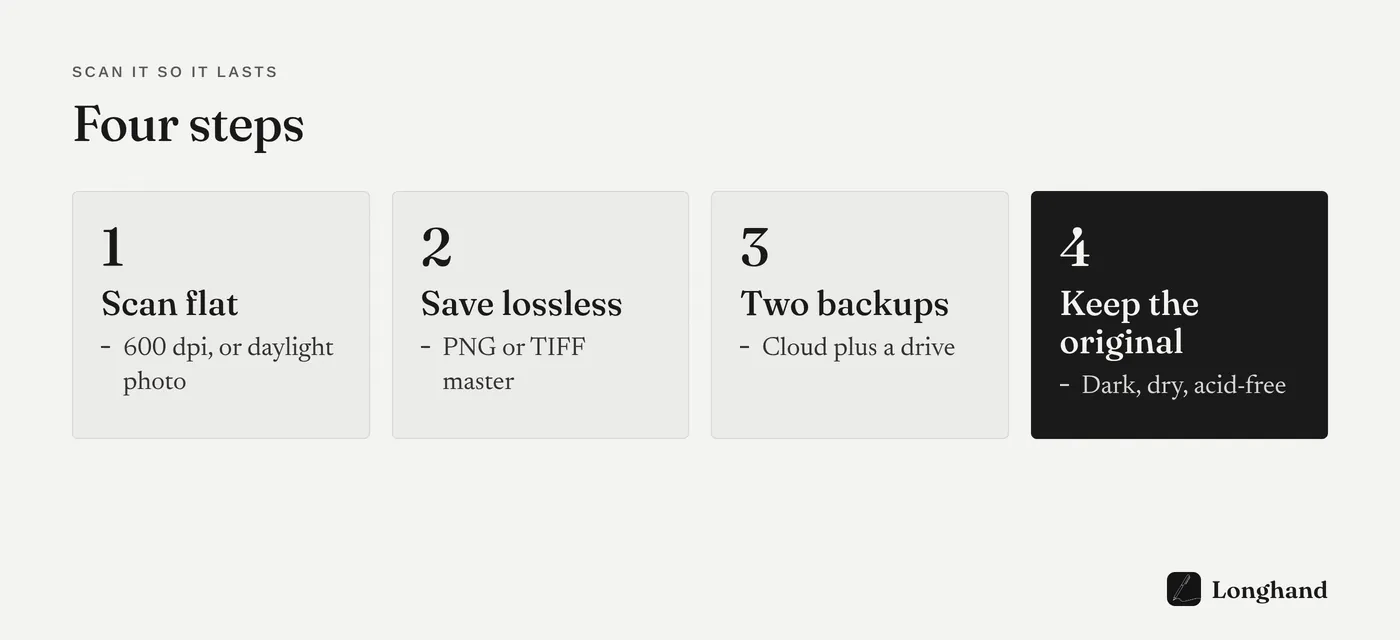
- Scan flat at 600 dpi on a home or library scanner, or photograph the page in soft daylight with the phone held parallel to the paper.
- Save a lossless master (PNG or TIFF), and make smaller JPEG copies to share.
- Keep two backups in different places, for example a cloud drive and a USB drive.
- Store the original somewhere dark and dry, ideally in an acid-free folder.
Free tools are all you need: the scanner app built into your phone (for example the Notes app on iPhone or Google Drive's scanner on Android) does a good job. Our guide to how to preserve family history covers storing originals in more detail.
Can you print the handwriting you collect in Longhand?
Yes. Longhand exports a PDF of the stories, with the handwritten pages, which you can print anywhere: at home, at a local print shop or with a print-on-demand service. Longhand doesn't print or bind books itself. If you want a step-by-step, see how to make a family history book.
It's not the right tool if you only need one sample for a piece of jewellery and already have it on a card. For that, just scan the card. Longhand is for when you want a lot more of their handwriting, and the stories that come with it.
Start a Longhand journal for your parent
Free during early access. One question a day, answered by hand; export a print-ready PDF anytime.


Disclosure: I make Longhand: Life Story Journal. I'm not paid by any maker or shop mentioned here. Questions or corrections: development@digitalsauce.io.
What else do people ask?
How do you preserve handwriting?
Scan the page flat at 600 dpi or photograph it in daylight, save a lossless copy such as PNG, keep backups in two places, and store the original somewhere dark and dry. Collecting new handwriting regularly matters too, since most families have only a few samples.
What can I make from a loved one's handwriting?
Popular handwriting keepsakes include engraved jewellery, framed letters, recipe tea towels, cushions, mugs and printed books of their stories. Most makers need a clear, high-resolution scan of a short sample.
Can I print Longhand answers?
Yes. Longhand exports a PDF of the stories with the handwritten pages, which you can print anywhere you like. Longhand doesn't print books itself.